


[Announcement] HGPI Joins the UHC2030 Task Force for the 2027 UN High-Level Meeting on UHC (July 6, 2026)
date : 7/7/2026

![[Announcement] HGPI Joins the UHC2030 Task Force for the 2027 UN High-Level Meeting on UHC (July 6, 2026)](https://hgpi.org/en/wp-content/uploads/sites/2/WHO-UHC2030_20260706_eyecatch-1.png)
Health and Global Policy Institute (HGPI) is participating in the Task Force for the 2027 UN High-Level Meeting (HLM) on Universal Health Coverage (UHC), convened by UHC2030, a global multi-stakeholder platform dedicated to accelerating progress toward UHC. HGPI takes part in the Task Force as a representative of the Civil Society Engagement Mechanism for UHC2030 (CSEM), with Mr. Joji Sugawara, Vice President of HGPI and a member of the CSEM Advisory Group, engaging on behalf of the Institute.
In September 2027, the UN High-Level Meeting on UHC will be held in New York, where countries will review progress on the 2023 Political Declaration and are expected to adopt a new political declaration to advance UHC. Amid overlapping crises—including conflict, climate change, debt distress, and population aging—UHC2030 has established a Task Force of experts to ensure that this meeting is meaningful and action-oriented, with measurable targets. Drawing on the latest data, the evolving global health context, and input gathered through inclusive consultations, the Task Force is developing a set of advocacy priorities and a shared narrative for the UHC Movement, and aims to submit action-oriented policy recommendations to the President of the UN General Assembly ahead of the 2027 UHC Political Declaration negotiations.
The Task Force comprises representatives from a wide range of constituencies and networks, including governments, international organizations, civil society, the private sector, and academia. As an independent, non-profit, and non-partisan think tank, and from the standpoint of civil society in Japan and the Asia-Pacific region, HGPI contributes evidence-based, patient- and citizen-centered insights and helps connect national and global discussions. In particular, HGPI works to ensure that perspectives such as cross-sectoral governance—including finance authorities—and the integration of climate action and health are reflected in the Task Force’s deliberations.
HGPI has progressively deepened its engagement with UHC2030: in November 2025, Mr. Sugawara was appointed to the CSEM Advisory Group, and in March 2026, HGPI signed and endorsed the UHC2030 Global Compact. Its participation in this Task Force forms part of that ongoing commitment. HGPI will continue to actively contribute to international policy development toward the 2027 UN High-Level Meeting on UHC, while bringing global discussions back to inform policy and implementation in Japan.
■ Composition of the Task Force (participating constituencies and networks)
Members of the Task Force represent the following constituencies and networks within UHC2030 (in alphabetical order). HGPI participates as a representative of the Civil Society Engagement Mechanism (CSEM).
- Academic & Research: Alliance for Health Policy and Systems Research, Health Systems Global
- Climate change and health systems: International Federation of Red Cross and Red Crescent Societies (IFRC)
- Coalition of Partnerships for UHC and Global Health: NCD Alliance, Partnership for Maternal, Newborn and Child Health (PMNCH)
- Digital health network: Transform Health, DTH Lab
- Healthcare professional associations: International Council of Nurses (ICN), World Medical Association (WMA)
- Healthcare student associations: International Federation of Medical Students Associations (IFMSA), International Pharmaceutical Students’ Federation (IPSF)
- Health security networks: Global Health Security Network
- Health systems–related initiatives: Health Data Collaborative, Unitaid
- Labour organizations: International Trade Union Confederation (ITUC)
- Local government networks: United Cities and Local Governments (UCLG)
- Monitoring & accountability experts: International Budget Partnership (IBP)
- Patient organizations: International Alliance of Patients’ Organizations (IAPO)
- Parliamentarian networks: UNITE Parliamentarians Network for Global Health
- UHC2030 Civil Society Engagement Mechanism (CSEM): SERAC-Bangladesh, Health and Global Policy Institute (HGPI, Japan)
- UHC2030 Country constituency: Democratic Republic of the Congo, Egypt, France, Japan, South Africa
- UHC2030 International Organizations (UN agencies, global health initiatives, and development banks): UNFPA, Gavi, the Vaccine Alliance, Asian Development Bank (ADB)
- UHC2030 Philanthropic foundations constituency: Rockefeller Foundation, UN Foundation, Wellcome Trust
- UHC2030 Private sector constituency: International Federation of Pharmaceutical Manufacturers & Associations (IFPMA)
- Women’s networks: Women Deliver, Women in Global Health
- Youth initiatives: WHO Youth Council, Youth Coalition
■ The process ahead (overview)
UHC2030 will host a series of global consultations between late 2026 and early 2027, with the goal of releasing the advocacy narrative ahead of the multi-stakeholder hearing on UHC (anticipated by mid-2027). The narrative will also be shared with the President of the UN General Assembly as a contribution to the zero draft of the political declaration on UHC.
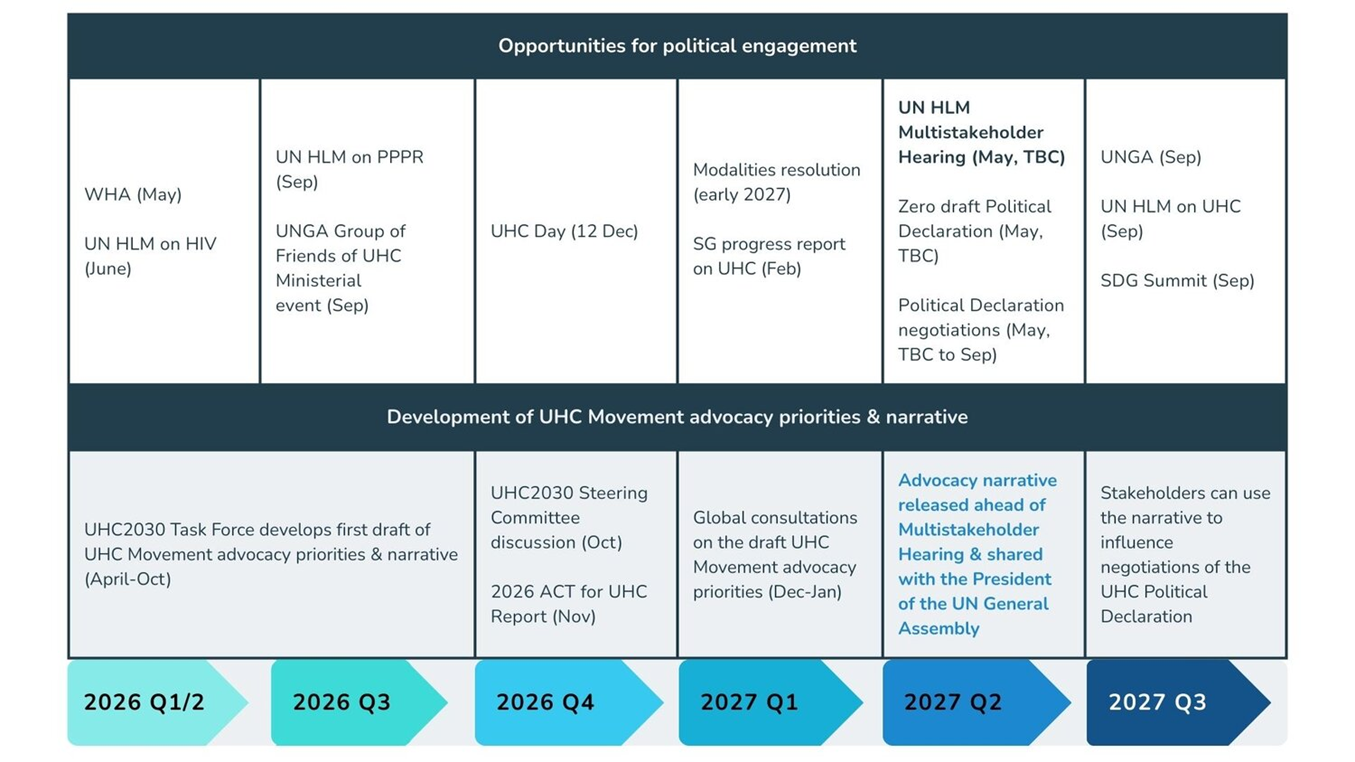
Figure 1:Overview of the process ahead, developed by UHC2030
Source:UHC2030, “UHC2030 and the 2027 UHC HLM – Timeline of the process and advocacy opportunities,” 2026.
■ About UHC2030
UHC2030 is a global, multi-stakeholder platform dedicated to accelerating sustainable progress toward Universal Health Coverage (UHC). Co-hosted by the World Health Organization (WHO), the World Bank, and the Organisation for Economic Co-operation and Development (OECD), it aims to achieve a world where all people can access the quality health services they need, when and where they need them, without financial hardship. Members join by endorsing the Global Compact and work together to build equitable and resilient health systems that leave no one behind. UHC2030 operates through three pathways: advocacy, accountability, and alignment.
Related Posts
-
2026-04-20
[Announcement] HGPI Endorses the UHC2030 Global Compact for Progress Towards Universal Health Coverage (March 31, 2026)
-
2025-12-11
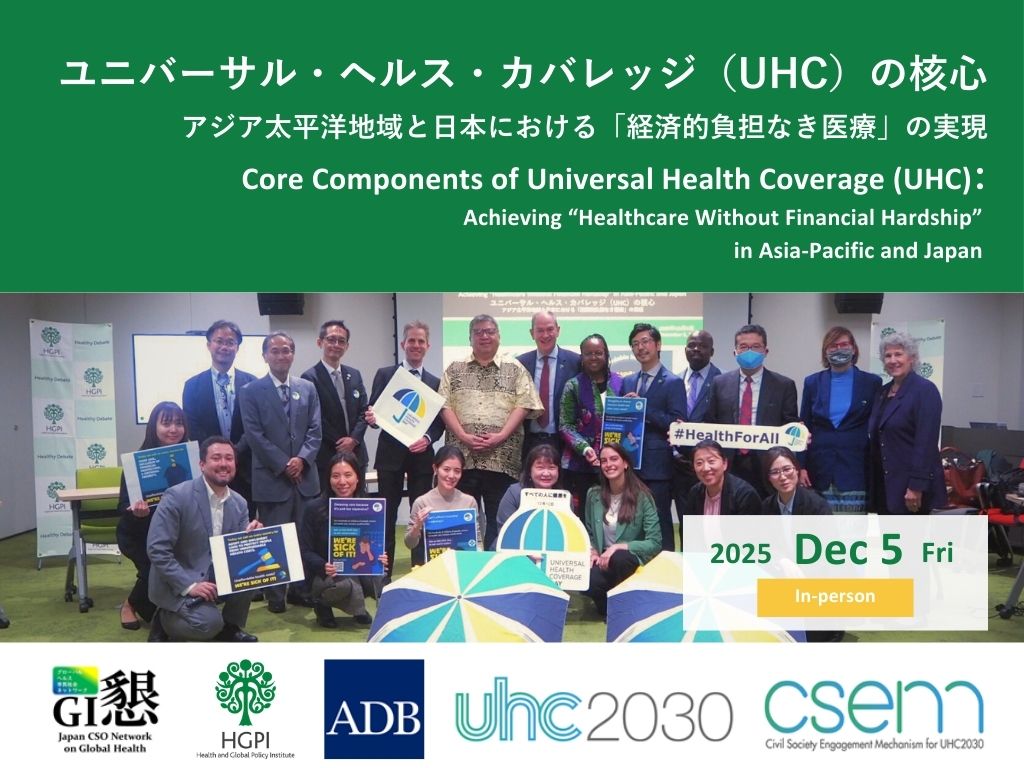
[Event Report] Core Components of Universal Health Coverage (UHC): Achieving “Healthcare Without Financial Hardship” in Asia-Pacific and Japan (December 5, 2025)
-
2025-11-01
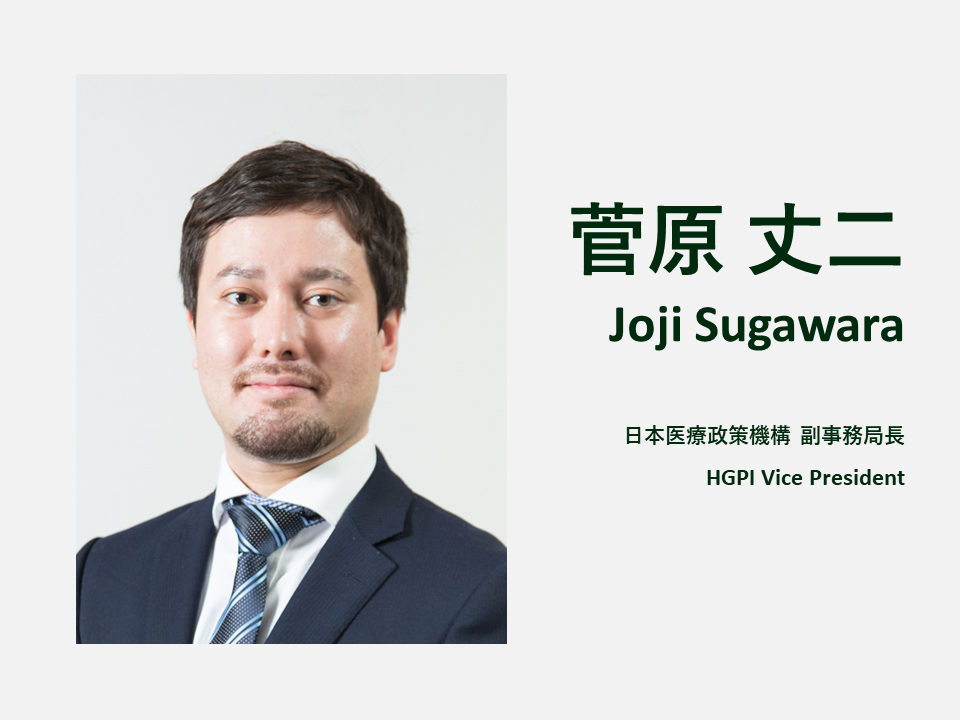
[Announcement] HGPI’s Member Appointed to the CSEM Advisory Group of UHC2030 (November 1, 2025)
-
2025-09-18
[Event Report] TICAD9 Thematic Event “Strengthening Health Systems and advancing UHC: Japan’s Leadership in Improving Access to Medical Oxygen” (August 20, 2025)
-
2025-04-23
[HGPI Policy Column] (No.58) — From the Global Health Strategy Project — “Toward Fair Health Systems: The Power of Data in Advancing UHC and Supporting Health Financing”
Top Research & Recommendations Posts
- [Policy Recommendations] Joint Statement “Protecting the Health of Both the Planet and People — A Japan-Model Planetary Health Strategy to Turn the Climate Crisis into an Opportunity for Health, the Economy, and Growth” (June 24, 2026)
- [Policy Recommendations] Improving Patient Access to Genomic Cancer Medicine (August 10, 2023)
- [Research Report] Perceptions, Knowledge, Actions and Perspectives of Healthcare Organizations in Japan in Relation to Climate Change and Health: A Cross-Sectional Study (November 13, 2025)
- [Research Report] Energy Conservation and Greenhouse Gas Emissions Reduction in Healthcare Facilities: Case Studies from New Construction and Facility Renewal (March 16, 2026)
- [Policy Recommendations] Developing a National Health and Climate Strategy for Japan (June 26, 2024)
- [Recommendations] Strengthening Epidemiology Education in the Veterinary Field for the One Health Era (June 19, 2026)
- [Research Report] AMR Policy Update #6: The New Global Action Plan on AMR (Part 1)
- [Policy Recommendations] Reshaping Japan’s Immunization Policy for Life Course Coverage and Vaccine Equity: Challenges and Prospects for an Era of Prevention and Health Promotion (April 25, 2025)
- [Research Report] AMR Policy Update #7: The New Global Action Plan on AMR (Part 2)
- [Policy Recommendations] Dementia Project “The Future of Dementia Policy Surrounding Families and Others Who Care for People with Dementia” (April 27, 2026)
Featured Posts
-
2026-06-04
[Registration Open] (Webinar) The 3rd J-PEP Seminar “Social Participation of People with Intractable Diseases and the Potential of a New Way of Working — ‘RD Workers’ — Lessons from Policy Advocacy Practice” (July 22, 2026)
![[Registration Open] (Webinar) The 3rd J-PEP Seminar “Social Participation of People with Intractable Diseases and the Potential of a New Way of Working — ‘RD Workers’ — Lessons from Policy Advocacy Practice” (July 22, 2026)](https://hgpi.org/en/wp-content/uploads/sites/2/HGPI_20260722_The3rd-J-PEPseminar.jpg)
-
2026-06-19
[Recommendations] Strengthening Epidemiology Education in the Veterinary Field for the One Health Era (June 19, 2026)
![[Recommendations] Strengthening Epidemiology Education in the Veterinary Field for the One Health Era (June 19, 2026)](https://hgpi.org/en/wp-content/uploads/sites/2/HGPI_eyecatch_20260619_AMR_Recommendations.png)
-
2026-06-24
[Policy Recommendations] Joint Statement “Protecting the Health of Both the Planet and People — A Japan-Model Planetary Health Strategy to Turn the Climate Crisis into an Opportunity for Health, the Economy, and Growth” (June 24, 2026)
![[Policy Recommendations] Joint Statement “Protecting the Health of Both the Planet and People — A Japan-Model Planetary Health Strategy to Turn the Climate Crisis into an Opportunity for Health, the Economy, and Growth” (June 24, 2026)](https://hgpi.org/en/wp-content/uploads/sites/2/JS_20260624_ENG.png)
-
2026-07-02
[Research Report] Medical Practitioner Interviews on the Current State and Issues for Interdepartmental Collaboration in Clinical Practice for Chronic Kidney Disease (June 30, 2026)
![[Research Report] Medical Practitioner Interviews on the Current State and Issues for Interdepartmental Collaboration in Clinical Practice for Chronic Kidney Disease (June 30, 2026)](https://hgpi.org/en/wp-content/uploads/sites/2/ckd-ncd-20260630-top_ENG.png)
